Allegheny County residents face significant challenges in accessing behavioral health services, an issue highlighted by recent studies and surveys. Notably, a Countywide survey revealed that 42.7% of respondents believe improving access to mental health care, particularly for young people, should be a priority. This finding is supported by research from the University of Pittsburgh, which documented long wait times for appointments and challenges in connecting with providers. These issues stem from a critical shortage of behavioral health professionals and are compounded by time-consuming provider search processes.

In response, the Allegheny County Department of Human Services (DHS), along with Community Care Behavioral Health (CCBH), the County’s behavioral health managed care organization, are pursuing a series of investments and initiatives aimed at addressing these barriers and increasing service availability.

To improve access and reduce wait times, DHS and CCBH are focusing on:

  • Creating visibility into appointment availability so clients and providers spend less time searching for services.
  • Supporting the behavioral health workforce through loan repayment and cohort-based training programs to increase the number of providers.
  • Investing in community-based mental health supports to offer additional options outside the traditional system.
  • Expanding access to proven treatments like medication-assisted therapy for opioid addiction, cognitive behavioral therapy and group therapy.
  • Augmenting clinical decision-making to ensure those who need help most get it quickly
Current information

The Allegheny County Department of Human Services (DHS) funds programs to assist young adults who are transitioning out of the child welfare system (also known as transition-aged youth) to secure employment, education, housing, behavioral health services, financial advice and more. Despite these service offerings, transition-aged youth have higher rates of homelessness, substance use, mental health challenges and incarceration, as well as lower rates of high school graduation compared with people who were not involved with the child welfare system. While targeted services are important, some human service needs result from poverty, which can be mitigated by providing direct financial assistance.

What is this report about?

In the summer of 2023, DHS launched a direct cash support program called Cash Assistance for Allegheny Young Adults (CAAYA), which provided a one-time payment of $4,000 to young adults, ages 18 through 22, with a history in the child welfare system, who were experiencing homelessness or were young parents who had an open case with Allegheny County’s child welfare office. In this report, we present a mixed-methods approach to evaluating the impact of CAAYA, including longitudinal surveying, a quasi-experimental analysis of administrative data in the Allegheny County Data Warehouse, and semi-structured interviews with cash recipients.

What are the takeaways?

  • CAAYA recipients demonstrated significant financial need. At the launch of the program, only 35% reported being currently employed and only 29% reported being in school either full-time or part-time. Those who had some form of formal employment in the 12 months before the program had mean annual earnings of $10,174. Twenty-eight percent had one or more children.
  • CAAYA recipients also lacked financial support within their community. Two-thirds of recipients reported not knowing anyone who would lend them $500 in a time of crisis.
  • Overall, the program encouraged about 100 individuals to open a bank account. Seventy-five percent (n = 774) of recipients chose to receive the money via bank account transfer and 25% via a virtual gift card.
  • Recipients used the cash assistance quickly. On average, $2,769 of the $4,000 was spent within the first month.
  • Car-related expenses ranked as the number one item for planned expenditures, and there was a 41% relative increase in car ownership three months after receiving the money.
  • The program improved self-reported well-being after receiving financial assistance, but the effects faded in the subsequent months.
  • CAAYA recipients increased their use of mental health outpatient therapy by 7% compared to a control group of individuals who were narrowly ineligible for the program. There was no change in utilization of crisis and inpatient services. In contrast to self-reported well-being, the program’s impact on usage of outpatient mental health services persisted for at least eight months after receiving funds.

How is this report being used?

As a result of this program, we are exploring additional opportunities to leverage cash assistance with this population to increase engagement in holistic supports and services. We are also considering longer-term programs with more frequent, smaller payments to targeted populations.  For future programs, we hope to receive state waivers for the impact of cash assistance on public benefits, especially if a program is designed to include ongoing payments.

For other local governments or providers who are considering cash assistance programs, we hope this report serves as a resource for program design and evaluation. Local governments should note that the success of the CAAYA program would not have been possible without our partner organizations. Trust in government significantly impacts the accessibility of services, particularly for marginalized communities. When first hearing about the cash assistance, many individuals who were eligible to receive the money thought that it was a scam. This skepticism was eased by having multiple trusted intermediaries ensure that it was a real program and that they should apply.

Current information

The 2008 Act 33 Amendment to the Pennsylvania Child Protective Services law requires state and local reviews of all child fatalities and near fatalities that result from suspected child abuse. In response, the Allegheny County Department of Human Services (DHS) conducts a comprehensive and multidisciplinary review of child fatalities and near fatalities in cases where there is suspicion of child abuse or neglect. These reviews are a component of DHS’s continuous quality improvement process.

This report covers child fatalities and near fatalities (critical incidents) in Allegheny County reviewed in 2022 and 2023 with a focus on drug ingestions, which have been a growing cause of these critical incidents. The increase in child ingestions and fatalities has been a nationwide trend in recent years and has worsened amidst the nation’s opioid epidemic. The County seeks to understand how these incidents happen and the circumstances surrounding them so that it can develop strategies to minimize them.

  • There were 50 critical incidents that occurred during 2022 and 2023. Forty percent (20) of these incidents were the result of unintentional drug ingestion. Unintentional ingestion comprised one-third of the 2022 incidents, rising to nearly one-half in 2023. The number of ingestion-related incidents has been rising year-over-year since 2019 and has been the primary cause of the County’s fatalities and near fatalities since 2022, surpassing blunt force or penetrating trauma and abusive head trauma.
  • In 18 of the 20 ingestion cases, at least one of the substances ingested was an opioid. Eighty-six percent of the near fatal and 100% of the fatal ingestions involved opioids.
  • The majority (70%) of ingestions occurred in children below the age of three. 40% of victims of ingestions were between one and two years of age compared to 27% of victims of non-ingestion fatalities and near fatalities. This age group are especially at risk for unintentional ingestion as they begin to gain mobility, which increases the likelihood of coming into contact with substances.
  • Only 4 (20%) families of ingestion-related critical incidents had active child welfare involvement at the time of the incident, though three quarters (15) of families had a history of child welfare involvement prior to the ingestion incident.
  • Sixty-six percent of alleged perpetrators in ingestion cases had received publicly funded substance use disorder services prior to the critical incident.  However, there was a reduction in engagement with these services within a year (43%) and within a month (36%) prior to the critical incident.
  • Of the known alleged perpetrators in ingestion cases, 41% had utilized medication for opioid use disorder (MOUD) at some point before the critical incident. There was a steady decrease in MOUD use leading up to the critical incident with 31% using MOUD within the year and 13% within the month prior to the critical incident

Allegheny County is taking an active role in addressing the ramifications of the opioid epidemic and the rising trend of unintentional ingestions. This includes enhanced training for Child welfare staff and access to naloxone, lockboxes and fentanyl test strips for caseworkers to provide to clients. The County, through its opioid settlement funds, has expanded convenient access to MOUD and evidence-based treatment (e.g., mobile medication, telemedicine prescribing, and incentives for abstinence from stimulants and opioids) and launched a Countywide marketing campaign in April 2024 warning about the dangers of opioid ingestions and the safety of administering naloxone to children. In addition, it has invested in preventative programming like residential substance use disorder treatment that allows families to reside together during a person’s treatment and in the Hello Baby approach, a collaboration which is designed for parents with newborns to improve family outcomes and maximize child and family well-being, safety and security.

Explore updated annual data and prior reports here.

The Allegheny County Department of Human Services (DHS) partnered with Pittsburgh Regional Transit (PRT) to launch a transportation assistance program called Allegheny Go. This program offers half-price PRT rides for county residents ages 12 to 64 who receive Supplemental Nutrition Assistance Program (SNAP) benefits, and do not receive any other transit fare discounts. 

Allegheny Go builds on the success of the Allegheny County Discounted Fares Pilot Program, which ran from November 2022 through June 2024.  

This dashboard describes the application process and reports on application statistics and participant demographics.  

DHS has set a goal of enrolling 15,000 participants in Allegheny Go. This dashboard tracks progress towards that goal. Staff monitor how many applications are received, how many are eligible, and make sure eligible participants receive their discounts.  


Allegheny County Department of Human Services developed these dashboards to provide information to the community about violence trends in Allegheny County and the City of Pittsburgh.

What is this dashboard about?

The dashboard contains information about all homicides in the county and city (as reported by the county’s medical examiner) and contains a link to the Pittsburgh Bureau of Police’s dashboard showing shootings within the City of Pittsburgh. The dashboard shows trends in homicides, including trends in demographic data for victims and trends in homicide locations. The dashboard also shows information on human service, physical and behavioral health, income supports and justice involvement for the victims prior to their death.

What data is available?

Data on homicides is available through the Allegheny County Medical Examiner’s office. It is available from 2007-present and is updated monthly. Data on program involvement (including prior justice involvement) comes from Allegheny County’s data warehouse, which integrates information from more than 20 distinct sources. Read more about the county’s data warehouse here.

Current information

Since 2016, the Allegheny County Department of Human Services (DHS) in Pennsylvania has utilized the Allegheny Family Screening Tool (AFST), which assists child welfare call screening caseworkers in their assessment of general protective service (GPS) referrals regarding potential child maltreatment.

What is this report about?

This report reviews the research evidence on algorithms in child welfare, specifically focusing on the causal impacts of the AFST and comparable predictive risk models (PRMs). It begins by summarizing the influence of these tools on child welfare decisions. The report then explores the discrepancies between perceived and actual effects of these models, highlighting the importance of bridging the gap between perception and reality to alleviate concerns and maximize the effectiveness of these tools.

What are the takeaways?

The impacts of predictive risk models in child welfare must be compared with alternative approaches to augmenting call screening caseworker decision-making. Traditional risk assessments in child welfare have been largely manual, prone to inconsistencies, and often omit critical information. Before implementing the AFST, Allegheny County did not employ any structured risk assessment.

The main conclusions from recent research on the AFST are:

  • The AFST changed the composition of investigated referrals. The introduction of the AFST decreased the probability of investigation for referrals with low risk of removal and increased the probability of investigation among referrals with high risk of removal. The introduction of the AFST also reduced the racial gap in investigation rates, particularly among higher risk referrals.
  • The AFST is reducing, not increasing, racial disparities. Researchers found that the introduction of the model reduced racial disparities in investigation rates across AFST scores, although the size and precision of the reduction varied. The AFST reduced the racial disparity in investigation rates for the highest risk referrals by 83%, from 10.6% to 1.8%. The researchers estimated that the AFST reduced the Black–White gap in removal rates of screened-in referrals by 73%, from 4.3% to 1.2%.
  • Screeners use the algorithm but with caution. Researchers found that call screening case workers are integrating information from the AFST effectively, aligning their decisions more closely with predicted removal risk compared with the period before the tool’s introduction. The tool is seen as a helpful source of additional information rather than a replacement for professional judgment. 

How is this report being used?

The application of algorithms to support decision-making, especially in sensitive areas like child welfare, mandates high transparency. It is critical that the complexities of predictive risk models are communicated clearly to all stakeholders to maintain trust and prevent misuse. DHS is committed to keeping the public informed about the use and impact of algorithms at the Department and draw upon current research to shape the implementation of these tools in the field.

Read more about AFST here.

Current dataset and related materials

What is the Community Need Index?

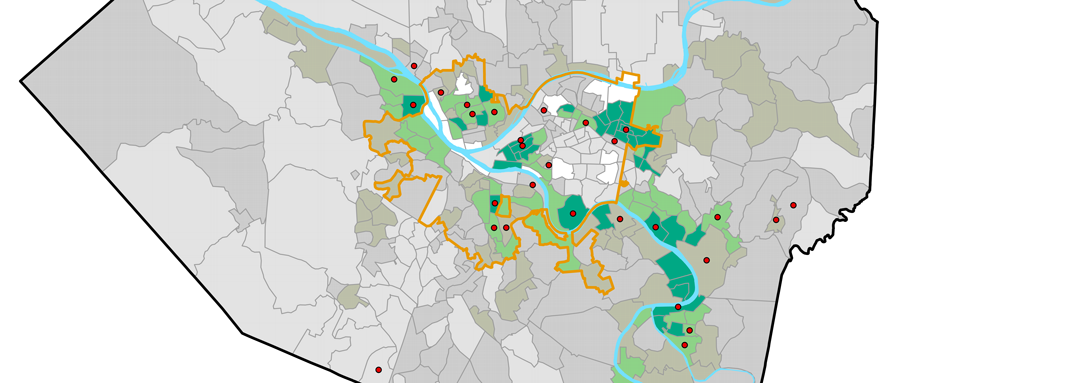
The Allegheny County Department of Human Services (DHS) conducts a Community Need Index (CNI) to identify specific areas that are in greater need, and face larger socioeconomic barriers, relative to others. The newest version of the CNI index ranks neighborhoods by need level by looking at:

  • The percentage of families who live below the poverty line
  • The percentage of unemployed or unattached males
  • The percentage of those aged 25 and up without at least a Bachelor’s degree
  • The percentage of single parent households
  • The percentage of households without internet access
  • Rate of homicide per 100,000 residents
  • Rate of fatal overdoses per 100,000 residents

The researchers used a census tract level to break up the region and assess needs. Census tracts are static, relatively small subdivisions of a county.

How can I view the findings?

An interactive map allows users to view and extract data from the 2024 CNI (which uses 2022 five-year data estimates and totals). The new report focuses on all of Allegheny County, examines changes in need over time, and places emphasis on the connection between race and community need. Earlier reports are linked below.

What are the takeaways?

  • In Allegheny County, we continue to find the highest levels of need in specific sections of the City of Pittsburgh (Hill District, South Hilltop, parts of the West End, Upper East End neighborhoods, Upper Northside) as well as census tracts outside the City of Pittsburgh (Mon Valley, sections of the Allegheny County River Valley, sections of Penn Hills, sections of Wilkinsburg, Stowe-Rocks).
  • There are vast discrepancies between the lowest need communities, which have an average poverty rate of 2%, and the highest need communities, where the average poverty rate is 38%.
  • With few exceptions, census tract-level community need is persistent over time.
  • Only about one-third of Allegheny County’s Black residents live in lower-need communities. For every other racial and ethnic group in the County, the majority of residents live in lower need communities. Black communities in Allegheny County have disproportionately high levels of need, as do a number of racially mixed communities. 
  • Poverty status alone does not account for where various racial and ethnic groups tend to live by level of need; poor Black and Latino families are more likely than other poor families to live in higher need communities. Even Black families above the poverty line are many times more likely than their Asian, White and Latino peers above the poverty line to live in higher need communities.

How is this report used?

The geographic dimensions of community need can help inform many aspects of DHS’s strategic planning and resource allocation decisions, such as decisions on where to locate Family Centers or new after-school programs.

Where can I go for more information?

For more information, you can read previous reports below. Or you can reach out to DHS-Research@alleghenycounty.us with any questions.



Previous reports in this series 

Previous datasets in this series

Current information

County human services includes programs from over 300 community-based agencies and is delivered by social workers, peers, and outreach staff working all throughout the county. These staff run out-of-school-time programs, answer hotlines, investigate reports of potential harm to children and vulnerable adults, deliver meals to seniors and run Senior Centers, make home visits to families with newborns, and do the administrative work that makes our human services run efficiently.

What is this report about?

This report highlights the 2023 accomplishments that stood out. There are many, many other achievements that people told us about. We chose the ones that made the biggest difference.

In Allegheny County, a network of shelters provides a temporary place to stay for people experiencing homelessness. Allegheny County’s emergency shelter network includes facilities which serve adults only and others that offer accommodations to families with children or other dependents. The County strives to ensure that every shelter stay is rare, brief and non-recurring.

Individuals in adult-only households make up about three-quarters of all shelter users. This data brief focuses on the 1,560 adults who entered one of the County’s 13 adult-only emergency shelters once or more from April 2022 through March 2023..  For descriptions of other people served in the homeless system, see these related data briefs: “Families using emergency shelters in Allegheny County” and “People Experiencing Unsheltered Homelessness in Allegheny County.

  • 70% (N=1,096) of the people using adult-only shelters were men. Black individuals were overrepresented, making up 51% of those using shelter but only 14% of Allegheny County’s population. 80% of people were between 25 and 64 years old and relatively evenly distributed among the four age groups in that range. 13% were ages 18 through 24 and 7% were 65 or older.
  • 76% (N=1,181) of people had only one shelter stay during the period of study. 15% had two stays and 9% had three or more.
  • Half of the shelter stays were for two weeks or less. 25% of shelter stays lasted five days or fewer and 75% were for 54 days or fewer.
  • Most of the people using shelters had recent addresses in Allegheny County communities. 46% had recent addresses in the City of Pittsburgh, with the most common neighborhoods being Carrick, East Liberty, Marshall-Shadeland and Sheradan. The remaining 54% had addresses outside of the City, with the most common municipalities being McKeesport, Wilkinsburg and Penn Hills.
  • Among shelter exits for which we have exit information, 49% (N=760) of stays resulted in exits to stable housing.  Almost half of the people who exited their stay(s) within two weeks exited to stable housing, increasing to 58-65% of people who exited their stay(s) after a month.
  • Less than half of individuals reported income from any source. PA Department of Labor and Industry data provides some insight over time; about one-third of people using shelter were employed in any given quarter from 2017 through 2022. For those who were employed, wages averaged between $663–$1,017 per month.
  • 17% (N=259) of people had a shelter stay in the year prior to their first stay in the study period. 8% (N=132) were engaged in a supportive housing program in the year prior to their shelter stay.
  • Other services and system involvement:
    • Behavioral health services. Among adult shelter users enrolled in Medicaid (N=945), more than 75% accessed behavioral health services. 43% (N=404) accessed mental health outpatient care, 39% used a mental health crisis service and 15% used a mental health inpatient service. The most frequent mental health diagnoses were depressive disorder, adjustment disorder, schizophrenia and bipolar disorder. 35% (N=327) used a substance use disorder service. The top substance use disorders involve opioids and alcohol.
    • Physical health services. For Medicaid-enrolled individuals, the most common chronic condition was hypertension, followed by kidney disease and diabetes. Adults using shelter have higher rates of many chronic diseases than those in the general Medicaid-enrolled population in the County.
    • Criminal Justice System. About a third of people were involved with the adult criminal justice system in the year prior to their shelter stay.
    • Other services. Five percent (N=75) of adults were involved in child welfare as a parent. 20% (N=46) of older adults (aged 60+) using shelter were connected to aging services in the year prior to their entry.

Emergency shelters are meant to be short-term housing for people experiencing a crisis. The County’s goal is to ensure that shelter stays are rare, brief and non-recurring.  The County is working with shelter staff and other housing providers to support client moves to stable housing when possible, with the goal of improving their overall outcomes and ensuring that short-term beds are available when people need them.

Current Information

Allegheny County Department of Human Services (DHS) believes that appropriate sharing of client information is essential to the provision, continuity and overall quality of care provided to DHS clients. It has created a number of tools and mechanisms to facilitate this sharing, including the creation of tools for contracted providers to access information on clients they are serving and mechanisms for providers to safely and security share client information back with DHS. Read more about this here and access the tools through the below links.

Where can I access provider tools?

Links to clientivew, a tool for individual care coordination, and provider connect, a tool for to support provider decision-making, are found here. You can also access data exchange, one of the tools that providers can use to securely share information back with DHS.

How I can gain access to these tools if I don’t already have it?

If you are a contracted provider with DHS, you can request access to provider tools through DHS’s application support portal.

Learn more about the Data Warehouse

What is the Allegheny County Data Warehouse?

The Allegheny County Data Warehouse brings together and integrates client and service data from a wide variety of sources both internal and external to the County.

How was the Data Warehouse developed?

The Data Warehouse was created by consolidating publicly-funded human services data (e.g., behavioral health, child welfare, developmental supports, homelessness and aging) and, over time, expanded to include data from other sources. The Data Warehouse was made possible with support from the Human Service Integration Fund, a flexible funding pool created by a coalition of local foundations for the purpose of supporting integration and innovation within DHS.

How does the Data Warehouse support of the work of Allegheny County?

The Data Warehouse was designed primarily to improve services to clients, but also to improve the ability of workers to perform their jobs and to support management decisionmaking; it is also intended to be available as a community resource, making data and information publicly available whenever possible.

Where can I learn more?

  • This overview document describes the development of the Data Warehouse, the County’s data sharing partnerships, and how the data is utilized to support client services and decisionmaking. 

In its responsibility for administering publicly-funded human services, Allegheny County Department of Human Services (DHS) plans for the allocation of more than $1B in areas that span behavioral health, children and families, aging, housing and homelessness, and intellectual disability and autism services.

How does DHS plan its allocation of resources?

DHS planning activities are ongoing and iterative. They include:

What is the County Human Services Plan?

The County Human Services Plan consolidates planning requirements for categorical components of the Human Services Block Grant, including Mental Health Community Base-Funded Services, Behavioral Health Services Initiative (BHSI), Intellectual Disabilities Community Base-Funded Services, Act 152 of 1988 Drug and Alcohol Services, Homeless Assistance Program Funding, and Human Services Development Funds. It is submitted annually to the PA Department of Human Services, 60 days after the agency releases its annual bulletin (usually in the summer).

What is the Needs-Based Plan and Budget?

The Needs-Based Plan and Budget articulates Allegheny County’s priorities, planned services, and resource needs for serving children and families – in particular those children and families who are involved with, or at risk of involvement with, the child welfare and juvenile justice systems. It is submitted annually to the PA Department of Human Services, Office of Children, Youth & Families (the budget narrative submission deadline is August 15th every year).

State Fiscal Year (SFY) 2026-2027

    Older plans:

    What is the Area Agency on Aging Strategic Plan?

    The Allegheny County Area Agency on Aging (AAA) is part of a nationwide aging network led by the U.S. Administration on Community Living and the Pennsylvania Department on Aging (PDA). Every four years, PDA requires each of the Commonwealth’s fifty-two (52) Area Agencies on Aging to submit an action plan for the following four years. This Four-Year Plan considers the demographic trends of the region, the changing needs of the consumers, and the current services provided by the Allegheny County AAA.

    Additionally, the Allegheny County AAA may release other strategic documents, including yearly program updates, budget prospectuses and annual reports.

    Community Services Needs Assessment & Strategic Plan

    Allegheny County DHS is the designated community action agency for the receipt of the County’s (outside the City of Pittsburgh) Community Services Block Grant (CSBG) funds. CSBG is a federally funded block grant from the US Department of Health and Human Services, Administration for Children & Families, Office of Community Services that supports services aiming to alleviate the causes and conditions of poverty in under resourced communities. CSBG recipients are required to conduct a needs assessment and develop a strategic plan no less than every 5 years.  

    Housing and Homelessness

    Allegheny County DHS, through its Office of Community Services, is the designated Infrastructure Organization and United Funding Agency for the Allegheny County Continuum of Care (CoC) – the network of services and stakeholders engaged in making homelessness rare, brief and non-recurring. Starting in 2016, the CoC underwent a community planning process to create its strategic plan. The strategic planning process is summarized in Preventing and Ending Homelessness – Community Strategic Planning Process. Principles guiding the strategic plan can be found in the Guiding Principles: Allegheny County Plan to Prevent & End Homelessness. The working board of the CoC, the Homeless Advisory Board (HAB), voted to accept the plan on July 25, 2017.

    Opioid Settlement Funding

    Other plans

      What is Hello Baby?

      New information added September 2023

      Hello Baby is designed for parents of new babies in Allegheny County to strengthen families, improve children’s outcomes, and maximize child and family well-being, safety and security. Hello Baby’s tiered prevention model offers a variety of supports designed to meet families’ varied needs and interests through the child’s third year.

      How was Hello Baby developed?

      Allegheny County Department of Human Services (DHS) undertook an extensive process to develop the Hello Baby prevention strategy. In addition to drawing from decades of experience by DHS leadership, service workers and families, the process included:

      • A review of data and best practices identified in the literature
      • Dozens of individual and group meetings with local service providers, families in the community, social workers, clinical specialists and local, national and international child development experts
      • Two independent, comprehensive reviews by experts in the field

      How is Hello Baby being used?

      The resulting prevention program has a differentiated approach, with flexible service delivery that is based upon the understanding that each family is unique and has different and varying levels of needs and barriers to support. In addition to self- and community-referral pathways, Hello Baby also uses an innovative and predictive risk model (PRM) that uses integrated data to identify the highest need families eligible for services. Hello Baby includes a universal entry point designed to increase awareness of available support services for all new parents and improve overall engagement rates. It incorporates community level support and proven home visiting techniques, hiring culturally competent staff with lived experiences to support families with moderate to high needs and intensive engagement and service coordination to support families with the highest needs. An evaluation partner has already been selected to ensure that Hello Baby benefits from rapid feedback and learning throughout the implementation.


      Related materials

      For more information about Hello Baby and to access resources for new parents, visit Hello Baby online.

      Recent press coverage of Hello Baby is available here.