The Allegheny County Department of Human Services (DHS) continuously strives to better understand our clients’ experiences and incorporate that feedback into service planning. We recently tested satisfaction kiosks as a new way of collecting feedback. The wireless kiosks were placed in a variety of service locations and asked clients to indicate their satisfaction by pressing a button, with the results quickly and anonymously sent to DHS. Staff and clients responded positively to the pilot, and we were able to collect feedback on a range of services. Building on the success of the pilot, we are continuing to employ innovative technology to hear from the people we serve.

This series of three reports gives an overview of the kiosk pilot program and then takes a closer look at ways the kiosks are helping us better understand our clients.

Piloting Satisfaction Kiosks: Overview, Implementation and Insights
Read about how the pilot was implemented, examples of survey questions, lessons learned, and next steps for building on the success of the pilot.

Satisfaction Kiosk Findings: Clients’ Overall Satisfaction
This data brief describes the results of six different survey questions that asked DHS clients about their overall satisfaction. Some clients responded to the question, “How did you feel about the service you received today?” while others were asked to agree or disagree with statements such as, “I feel better than when I came in” and “I felt heard today by staff.”

Satisfaction Kiosk Findings: Clients’ Experience with Homelessness and Housing Services
This data brief describes the results of survey questions that were asked of some clients who visited housing and homelessness programs. Clients used kiosks to give feedback on service quality, their unmet needs, and interest in possible future programming.

In an effort to provide affirming services to LGBTQ (lesbian, gay, bisexual, transsexual, queer/questioning) communities involved with Allegheny County’s Department of Human Services (DHS), the first Department-wide LGBTQ work group began in 2009. At that time, sexual orientation and gender identity were not frequently discussed as part of DHS practice. By 2016, DHS had made great strides in affirming LGBTQ communities. Work within DHS and with community partners led to written practice guidance related to gender and sexuality, improved understanding of bias in the workplace, the creation of an LGBTQ advisory council, and improved data collection related to gender and sexuality.

This report shares DHS’s experiences from 2009 through 2016 as it worked to better understand and serve the LGBTQ communities of Allegheny County. We share our strategies, challenges and lessons learned with the hope that others can learn from them.

Click here to read the report. 

The Allegheny County Department of Human Services (DHS), in partnership with the United Way of Southwestern Pennsylvania, has been offering free tax preparation in several locations throughout the County since 2011. Thirteen trained volunteers helped 343 clients in need prepare returns last year. Collectively, these clients received a total federal refund of $519,645, at no cost to them. This brief includes demographic information about the taxpayers who received DHS tax assistance services and the overall results of the 2017 program.

Click here to read the brief. 

Allegheny County, like much of Western Pennsylvania, is in the midst of an opioid overdose epidemic and it is vitally important that County residents have access to the best and most effective treatment to support their recovery from opioid use disorders. Medication-assisted treatment, or MAT, combines medication and counseling/behavioral therapy and, when clinically appropriate, is a standard of care in the treatment of opioid use disorders. Research has proven MAT to be highly effective in improving recovery outcomes and reducing criminal behavior and risk of infectious disease.

The Allegheny County Departments of Health and Human Services, together with Allegheny HealthChoices, Inc. and Community Care Behavioral Health, issued a Joint Position Statement on Medication-Assisted Treatment for Opioid Use Disorders in Allegheny County, describing their expectations for contracted treatment providers and others who encounter or serve individuals with opioid use disorders. It states that every person entering substance use treatment for opioid use is entitled to the opportunity to learn about and consider MAT as a treatment option. It is intended to dispel ambiguity and should be understood as a clear statement in support of an effective treatment continuum that includes MAT.

Click here to view the full joint position statement.

Receiving more than 3,000 calls annually, the Allegheny County Department of Human Services (DHS) Director’s Action Line (DAL) is an effective mechanism through which clients and other community members can resolve issues and get information about DHS services. It is also an important feedback tool for DHS, providing information about client experiences and perceptions of the services they receive. An evaluation was conducted of both of these functions, and the findings led to valuable insights and recommendations for improving outreach and follow-up.

Click here to view the full report.

Creating an integrated Department of Human Services in 1997 was a herculean task. It involved combining four formerly-separate departments, geographically dispersed and structured in very different ways. Administratively, technologically, fiscally and culturally, each had functioned autonomously for decades.  A strategic set of engagement and communication efforts were key to the community buy-in and support that led to the successful integration of the department.

Click here to read the full report. 

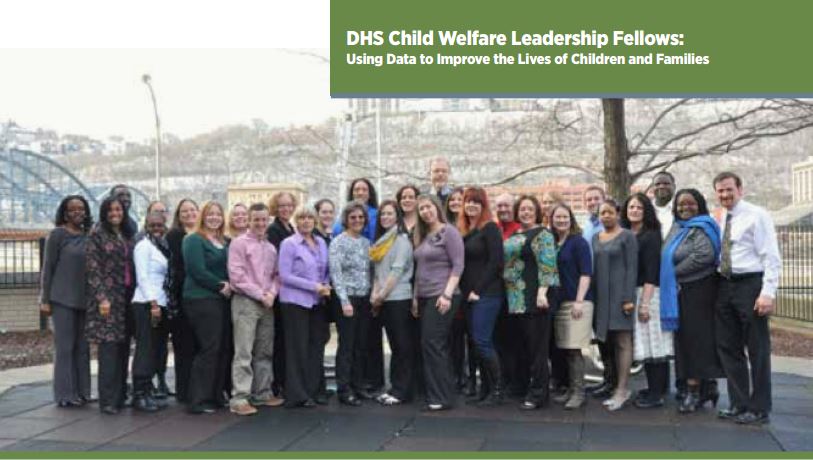
Twenty-seven child welfare professionals participated in the first year of the Leadership Fellows program, learning how to use data to 1) identify issues that negatively impact children and families in the child welfare system and 2) make recommendations to address those issues. The fellows focused on teenage girls in out-of-home placement and recommended strategies to reduce home removal and – in situations where placement was necessary – to improve the placement experience.  In addition to addressing system issues, the program served as a professional development experience for the fellows and resulted in improved career opportunities for many.

Click here to view the full report. 

Content and analysis: Brian Bell and the 2014 Child Welfare Leadership Fellows
Writer: Susan Gove


Linking provider payments to performance measures is gaining popularity as a way to improve outcomes, efficiency and innovations.  Three performance-based contracting models have been implemented in Allegheny County, targeting: 1) the Senior Center network; 2) child welfare providers; and 3) DHS-funded providers of the Allegheny County Jail Collaborative.  Each focuses on service-related outcomes and offers fiscal incentives for improvement.

Click here to view the full report.

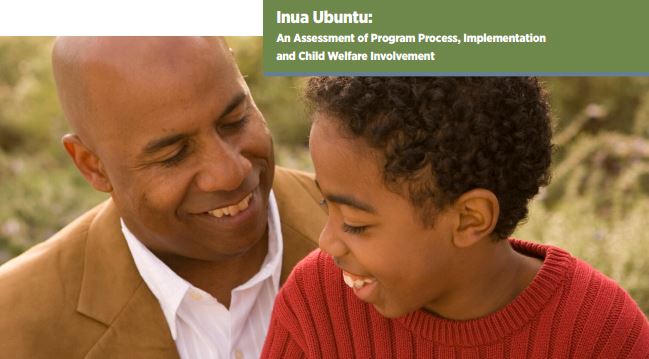
Inua Ubuntu, designed to provide culturally-based intervention with a goal of reducing the rate of out-of-home placement for African American males, was implemented by the Allegheny County Department of Human Services in 2010.  The program is based on an African-centric concept of family and community, and is driven by the theory that services are most effective when delivered by those who understand – and are a part of – the family’s culture and community.

Click here to read the full report. 

An initial assessment is often a client’s first service experience, and, as such, it plays a major role in the perception, comfort and outcomes of the service. Simultaneously, the assessment can set the tone for the eventual outcomes of the  This report describes the process of adapting and/or developing common assessments for use in Allegheny County, the implementation process, and the impact on consumer engagement and service delivery.

Click to read the full report.

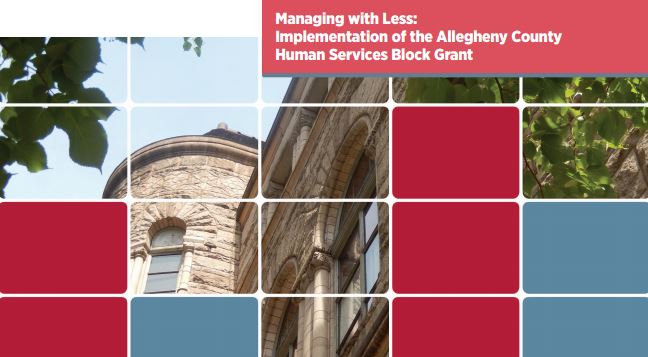
Fiscal Year 2012/2013 saw the implementation of the Human Services Block Grant in Allegheny County, which combined a 10 percent decrease in funding from the Pennsylvania Department of Public Welfare (now the Pennsylvania Department of Human Services) with greater flexibility in how those funds could be spent. The local planning process included community involvement and an innovative Call for Concepts process.

Click to read the full report.

The Brief Wraparound Residential model emphasizes working with youth on what they need to be successful following their stay in residential care; that is, at home, in school and in the community. It involves immediate engagement with the youth and family and is designed to support reunification and successful re-entry into the home and community. This report describes the model as well as lessons learned and challenges to full implementation.

Click here to view the full report.

Natural supports are those family members, friends and community members who enhance our lives and support us in achieving our goals.  The use of natural supports is becoming more common in association with human services, and DHS actively promotes the identification of natural supports and their involvement with individuals and families involved in a variety of services. A department-wide survey and individual interviews were conducted to assess staff’s awareness of the importance of natural supports and understand their utilization across DHS.

Click to read the full report.

In 2007, DHS established an Immigrant and International Advisory Council, seeking to ensure that its services were culturally competent and accessible. Since that time, the Council is credited by many with making the region more immigrant-friendly. Beginning with two specific goals – cultural competence training and improving access to translation and interpretation services – the Council has grown and expanded its reach.  This report traces the history of the Council and its accomplishments.

Click to read the full report.

To commemorate 50 years during which Allegheny County government has been responsible for providing public child welfare services, DHS commissioned this historical overview of child welfare in the county.

Click here to view the full report. 

Related:
The Next Page: Bold ideas behind Pittsburgh’s first child-welfare system – Meet the heroines

Pittsburgh Post-Gazette, January 4, 2014