
When its largest provider of Home -Delivered Meals (HDM) suddenly decided to discontinue its service, the Area Agency on Aging (AAA) had just weeks to ensure that 800 frail and disabled adults would continue to get the meals they depended upon. Partnering with six providers, AAA seized the opportunity to reshape the HDM program. By dividing the county into four geographic regions, increasing efficiencies with equipment and staffing, utilizing technology to improve routes and enabling drivers to send alerts should they observe a change in a consumer’s health or well-being, a better and more prevention-focused program resulted.
Designed to inform local leaders, this report places the issue of homeless youth within a national context and provides information about local need, services and strategies to prevent and address homelessness among Allegheny County’s young adults.
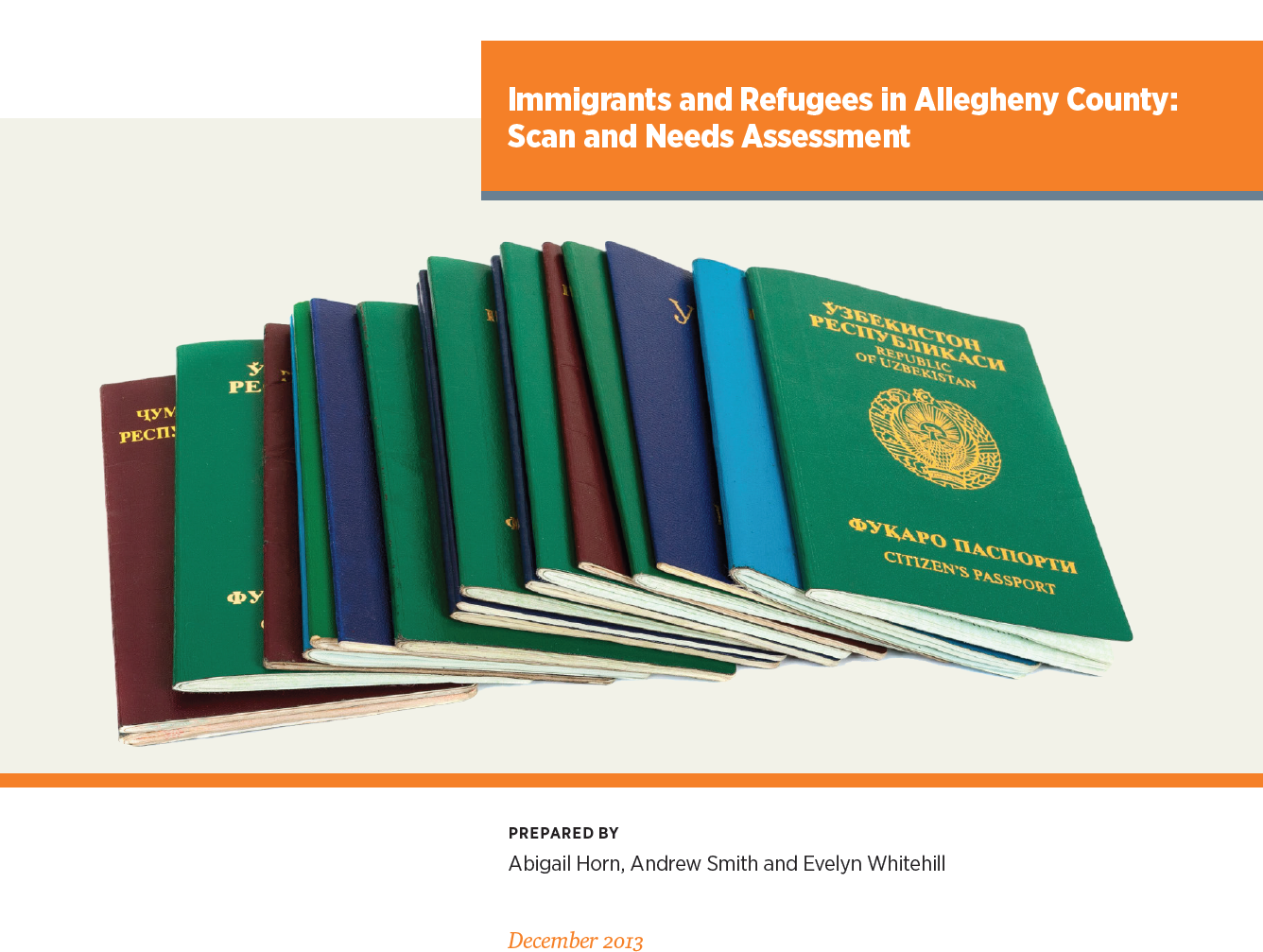
This assessment provides information on local immigrant and refugee populations in order to identify current and emerging service needs, gaps and barriers. It includes a set of recommendations for improving their access to services.
DHS is committed to meeting the human services needs of county residents, particularly the county’s most vulnerable populations, through an extensive range of prevention, early intervention, crises management and after–care services. While system involvement is sometimes inevitable, necessary and highly beneficial to consumers, DHS believes that preventing the need for such system interventions can ultimately result in safer, healthier and more cost–effective alternatives for consumers and for the region at–large.
This report begins by presenting a framework for prevention in the human services field. It then goes on to classify and catalog all prevention efforts across DHS, including program descriptions and other key pieces of information that are important to understanding the evaluation status and priorities of each program or service.
This profile of the Pittsburgh neighborhood of Homewood (and subsequent Addendum) was compiled by DHS to assess demographic changes and examine quality of life issues-poverty, education, health care-in Homewood and in the City of Pittsburgh and Allegheny County to accurately assess the community’s assets and needs.
DHS surveyed providers and DHS staff on behalf of the Immigrants and Internationals Advisory Council to identify the need for limited English proficiency services in the community and assess DHS’s ability to meet those needs. Results of the survey are included in this report.
DHS examined a cohort of homeless individuals to describe the demographic composition and service utilization of the county’s homeless population, as well as to quantify the costs associated with their care.
Homeless individuals in Allegheny County frequently consume public resources and contribute to a measurable and sizable public expense; the consumption of mental health services by the homeless has the most impact on the overall costs calculated in this study; and there is a small high-end user population that has expenses beyond what would be typically anticipated. These high-end users access more behavioral health services and are incarcerated more frequently than the general homeless population; the number of individuals in this high-end user group (<100) is manageable for targeted services; and the costs associated with their care are sizable enough to offer opportunities for savings.
In this analysis, DHS examined the issue of home foreclosures in Allegheny County.
This document, created in response to needs identified by the diverse groups participating in the DHS Immigrants and Internationals Advisory Council, serves as a resource guide for those seeking information about immigrants’ eligibility for public benefits.